On a shift in Watts
Honoring Black History Month with two stories exploring fair policing

On the last day of Black History Month, I want to share with you a look behind the scenes of a story I published this month with Reasons To Be Cheerful, the wonderful solutions outlet founded by David Byrne. It’s a story I`ve been working on since last summer.
I accompanied Emada Tingirides on a shift in the housing projects of Watts that was once the turf of the Bloods and the Crips.
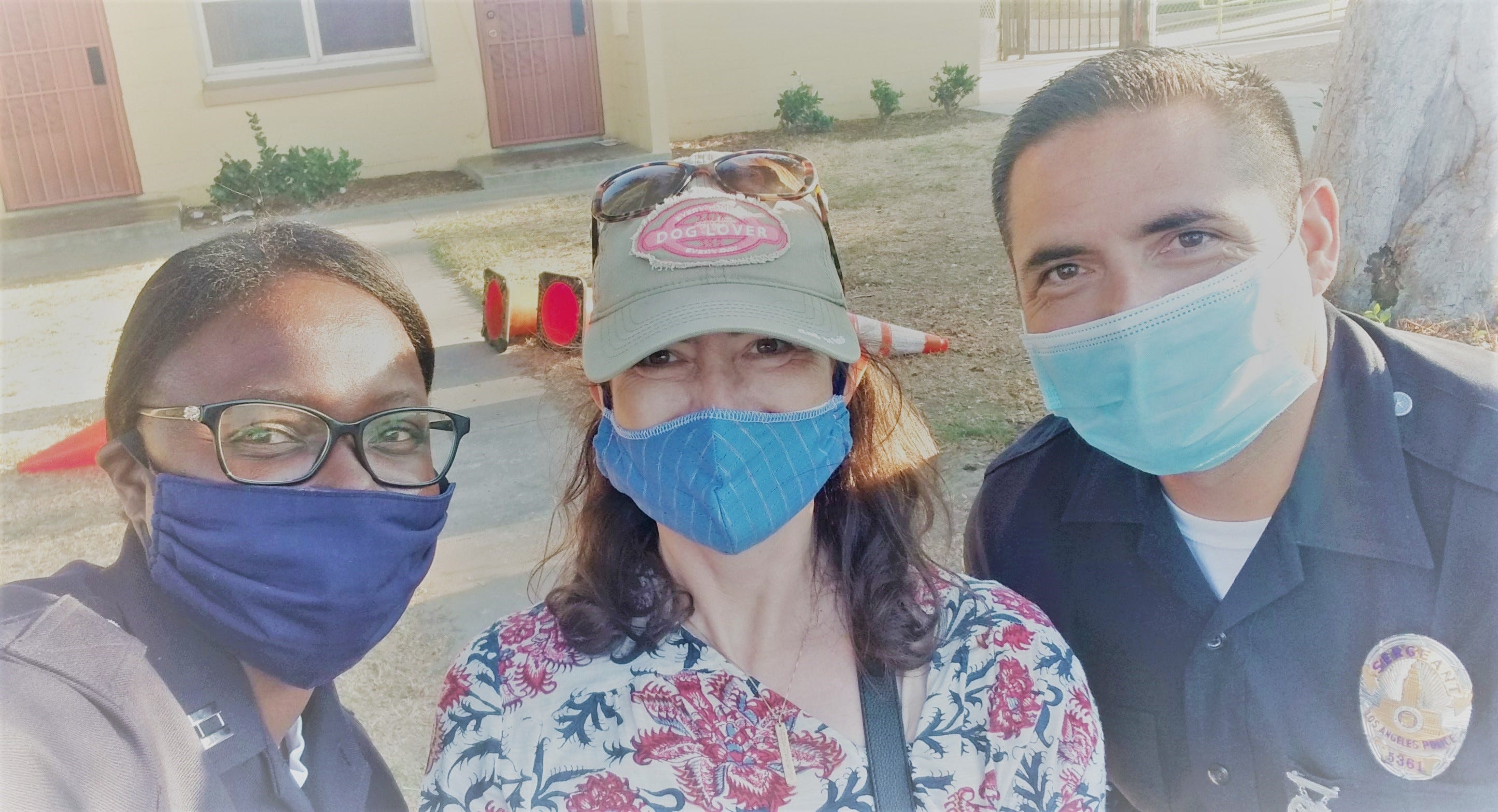
Tingirides, 50, (pictured on my right; Sergeant Christian Zuniga to my left) is only the second Black female officer in Los Angeles to reach the position of Deputy Chief, and I wanted to know how she handles the challenges in the notoriously hardcore police force. Since September 1, 2020, she has been in charge of the Department’s new Community Safety Partnership Bureau (CSP). “It’s about trust,” Tingirides says when asked to describe CSP. “The community has to hold law enforcement accountable, and law enforcement has to hold communities accountable. We ask the communities what they expect from us, and we take their goals seriously.”
This newsletter focuses on healthy solutions, and health includes safety. The option to venture outside safely, for kids to have access to counseling and sports, to grow up in a community that is marked by trust, not by violence.
What is not in the published story is what happened the night before I went to Watts:
The night before our meeting, another black man was shot, this time in South Los Angeles. As far as anyone knows, 29-year-old Dijon Kizzee ran down Budlong Avenue, away from the officers when they wanted to inspect his bicycle. When he finally stopped he pulled up his pants that were sliding below his waist and a gun toppled out to the ground. Though he did not attempt to pick up the gun, the police fired deadly shots.
The police justified the shots with his attempt to flee and his weapon, and as with so many of these fatalities, a question remains: Couldn’t an obviously confused and panicked man who was not holding a weapon but had already dropped it, couldn’t he have been stopped by any other means? The autopsy revealed his body was struck by 15 shots.
“My son is 20 years old and Black,” says Deputy Chief Tingirides. “I have to have difficult conversations with him about the police in this country. There are these incidents we all need to own. I know both sides of the debate.”
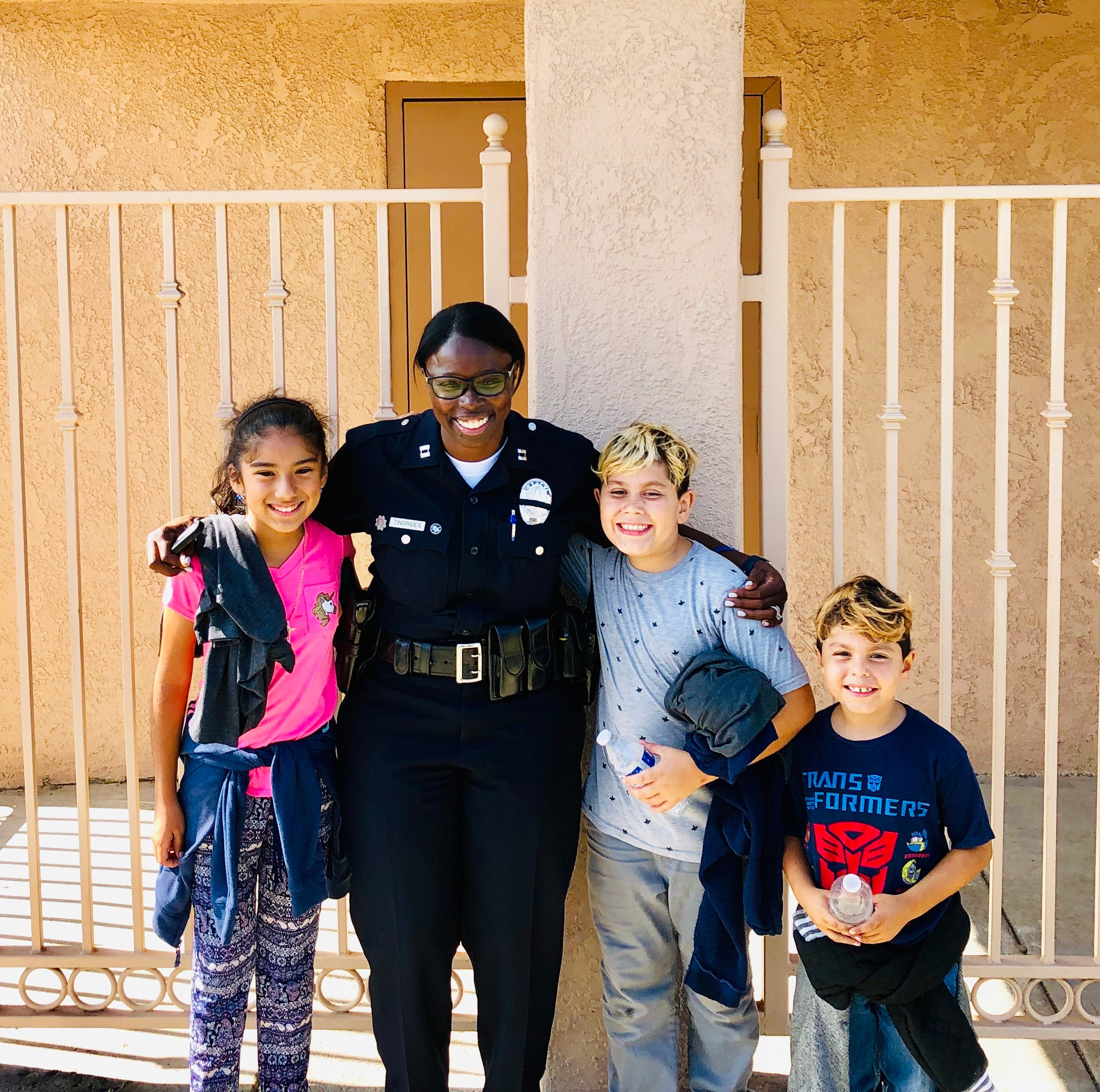
Photo: CSP.
I wanted to meet with Tingirides because she has been a pioneer in changing the culture of the force. “Our main job is to keep the community safe,” Tingirides says. “But this can also mean helping a family get groceries or sending a youth to counseling because these are aspects where crime can develop. It is a holistic approach.”
She has been working to expand the program from its current ten neighborhoods to more of Los Angeles — all while trying to sustain the inroads it has made with the Black and brown communities it has touched.
Read the full story here.
But the visit was not without tension. Just as I was about to leave, three shots rang out close by. Everybody froze. Tingirides and Sergeant Christian Zuniga intently listened into the sudden silences. “Too much air, right?” Zuniga shot a questioning look at Tingirides. She nodded. “Sounds like paint guns,” she agreed. Good to have enough experience on the job to assess the danger by the sound color of shots.
All yours,
Michaela
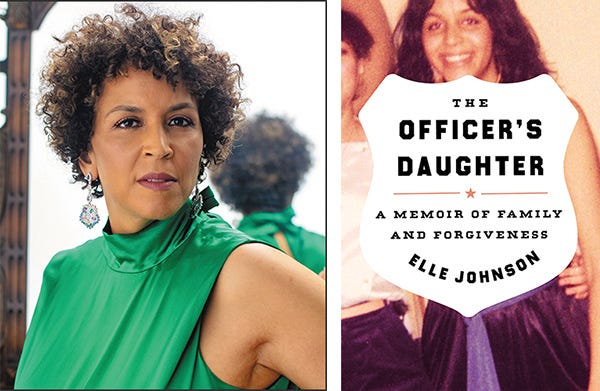
Reading tip
My friend and colleague Elle Johnson just published a masterful memoir, the Officer’s Daughter, about the event that ended her childhood innocence: When she was sixteen, her 16-year-old cousin, Karen, was shot dead in a robbery gone awry at a local Burger King in the Bronx. Her book is a reflection about the many nuances of forgiveness, about growing up as the daughter of a Black parole officer, and about her family’s request to write a letter to the parole board in charge of the decision whether to release the man who murdered her cousin. A very timely research into what justice means, how to decide whether someone is worthy of redemption, and also a rare intimate glimpse into the conflicted role of a Black parole officer who is desperate for control in a world where he has none.