
Spring Cleaning Edition
What to keep, what to let go of...

Dear Solution-eers,
This newsletter is now a little over one year old. I want you to know how grateful I am to you for your interest in my work. Maybe you stayed with me right from the beginning of Healthy Solutions (or even earlier when I started my very first newsletter in 2013) or maybe you just signed up recently. Maybe you’re supporting my work with a paid subscription (thank you!) or you’re just checking it out for free.
Whatever the case, I’d love to hear your feedback. What are the stories and topics I shared you found the most interesting? I started this letter to share solutions. Now it’s time to check back in with you about what kind of solutions you are waiting to hear more about.
Would you like to hear more about
* solutions for climate change and the environment?
* non-toxic housing?
* healthy eating?
* social justice?
* all of the above
*………………..?
Please respond in the comment section!
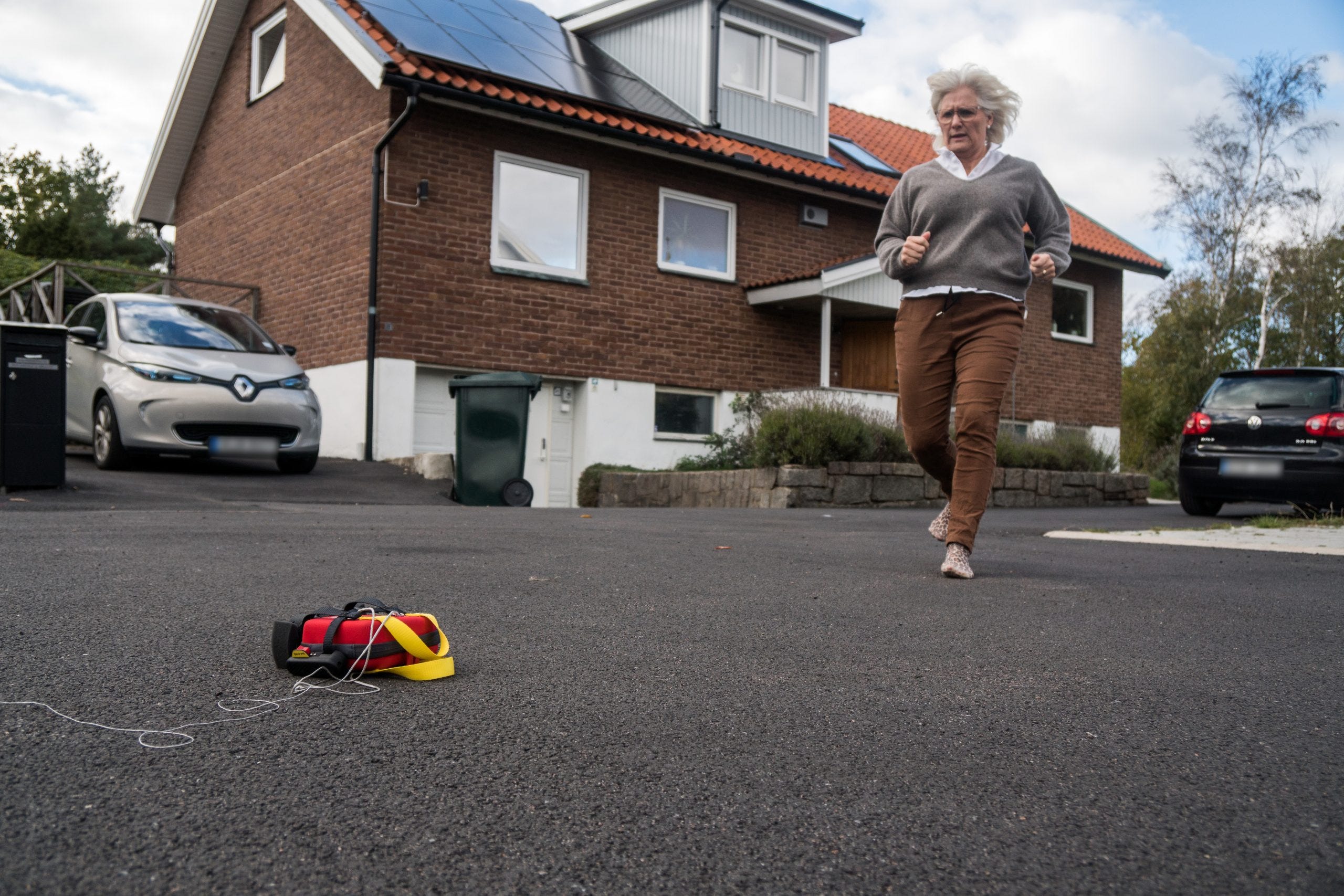
This week, I got a wonderful letter from a reader who said that while she was devastated by the war in Ukraine, she was surprised and grateful to hear that drones are not only used for war purposes but are increasingly deployed in healthcare. In Sweden, drones are taking off within 60 seconds after an emergency call for a cardiac arrest comes in. They are beating ambulances to the scene – and saving lives. Read the full story here.
Also, one of my favorite artists I’ve ever written about is Jason Barnes. After he lost his right arm in an electrocution accident, he thought his career as a drummer was over. Remember Rick Allen, the Def Leppard drummer I interviewed for Bouncing Forward? Allen lost his arm in a car accident and now relies mainly on foot pedals to achieve the Def Leppard sound that made him famous. Barnes chose a different route: Gil Weinberg, the founding director of the Georgia Tech Center for Music Technology and an eminent authority on artificial intelligence, built him bionic prosthetics tailor-made to play the drums. “We use electromyography (EMG),” Barnes explains. “Its sensors on my upper arm muscles pick up signals from my residual limb. I can flex my muscles to tighten my grip, and when I relax my muscles, it loosens the grip.” With his A.I. arm, Barnes even made it into the Guinness Book of World Records as the world’s fastest drummer, achieving 20 hits per second with each stick. Read about him, why this feat benefits everyday people like you and me, and listen to him here. He is now living his dream as a full-time producer and songwriter, and has performed internationally under his stage name Cybrnetx. Drum roll, please….
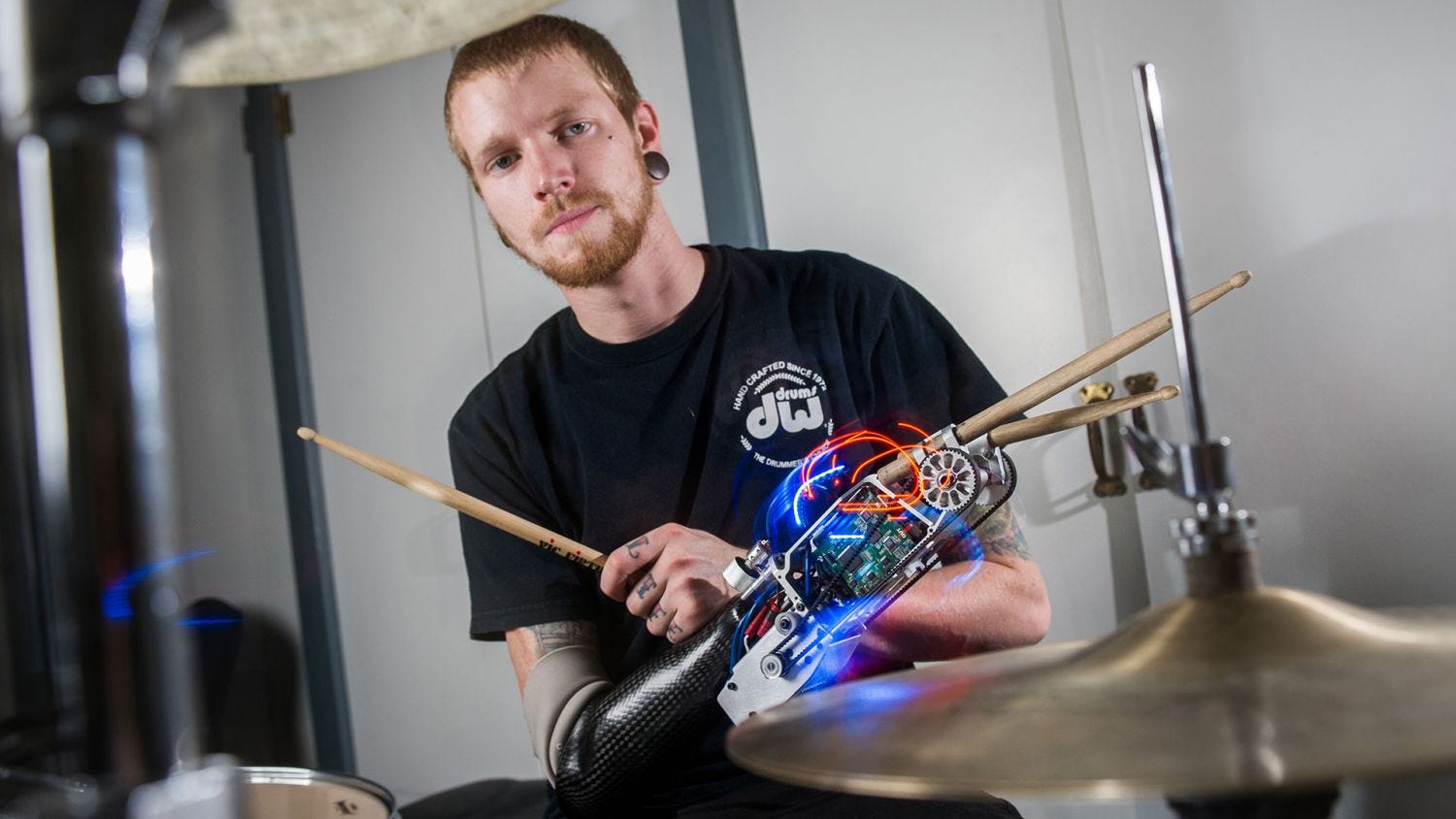
Credit: Georgia Tech
I wrote another story about the endangered mountain lions in California and interviewed Winston Vickers, the man who’s trying to give mountain lions a fighting chance in Southern California. I gingerly asked him if I could accompany him on his next attempt to collar a mountain lion, and he said YES! I’ll keep you posted (if I live to tell the tale).

This newsletter is a little later than usual because I’m moonlighting as an editor at Next City this month where we’re publishing lots of stories about how cities can function better, be more inclusive and right some of the historic wrongs that have been committed. Like Reasons to Be Cheerful, it is a non-profit publication free of charge. Check out some of my favorite stories here, for instance, about the Baltimore developer who is breaking down barriers to rebuild communities.
I didn’t write them but I edited them and am proud to share them.
Happy reading, and please let me know what motivates and inspires you!
Yours,
Michaela