
"The Message of Hope"
An interview with renowned ME/CFS researcher Dr. Nancy Klimas

For a European magazine, I spoke with Dr. Nancy Klimas, one of the world’s leading researchers on Myalgic Encephalomyelitis/Chronic Fatigue Syndrome (ME/CFS), a chronic disorder affecting the nervous and immune systems. An estimated 17 million people worldwide are believed to live with the condition. She impressed me so much that I want to share the interview with you. Since the late 1980s, the American immunologist has studied the disease, directed a clinic for immune disorders at University of Miami for many years, and continues to combine basic research with direct patient care.
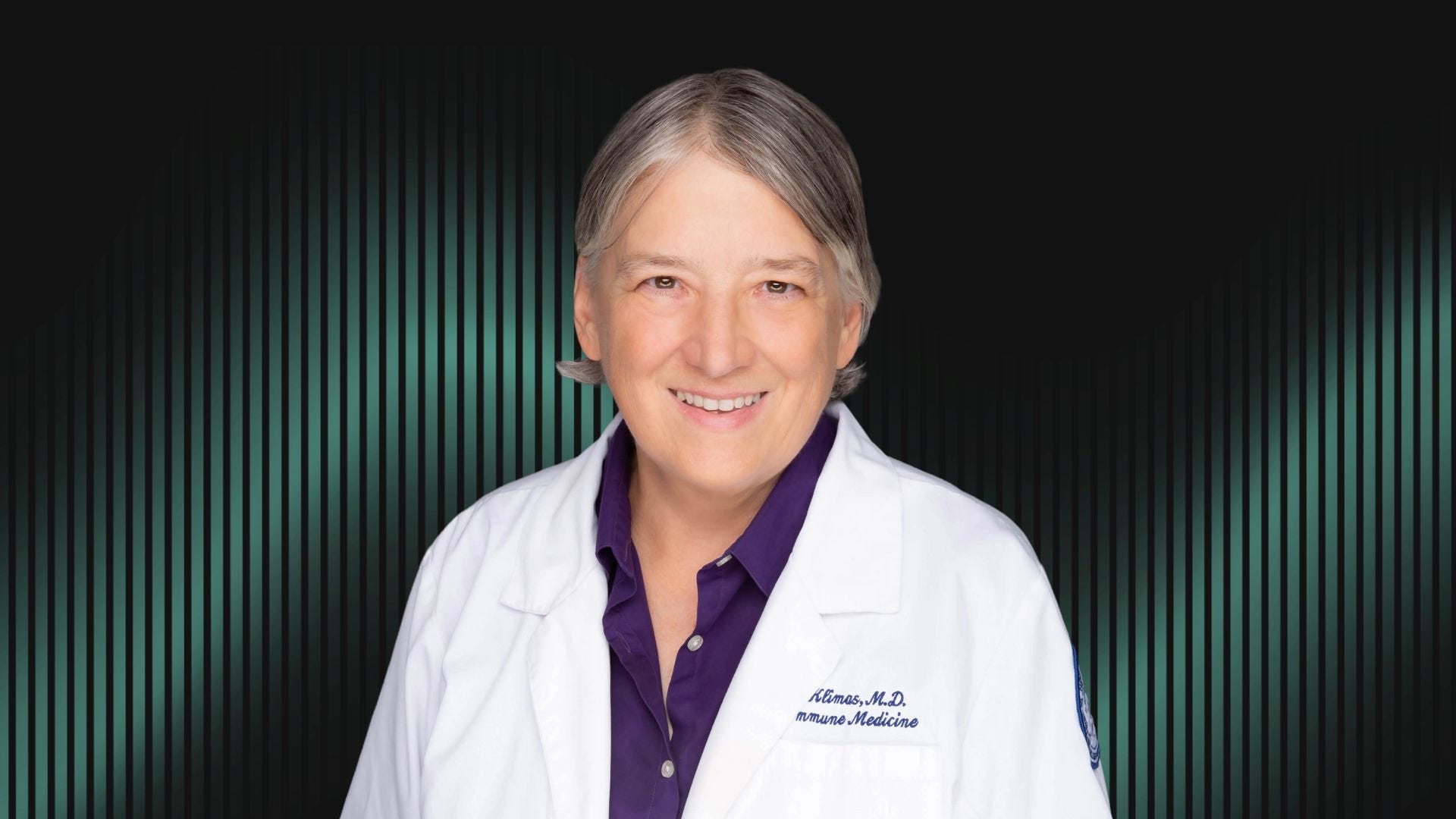
Her perspective is clear: ME/CFS is not a “mysterious exhaustion,” but a complex neuroimmune disease — and one that can be treated if its underlying mechanisms are understood. With no makeup, her shoulder-length gray hair tied back in a simple ponytail, she sits at her desk in Florida, answering questions with warmth and attentiveness.
You were one of the first researchers to work on ME/CFS in the 1980s. What first got your attention?
I was a brand-new doctor at the University of Miami, running the immunology and allergy clinic. A patient came to me after seeing many doctors in the community, including psychiatrists, who told her nothing was wrong. We ran a full immune evaluation through Mary Ann Fletcher’s laboratory, which had been set up during the HIV epidemic. My patient’s immune system was over-activated, and her cell function was poor. When I told her we had found something biologically wrong, she burst into tears from relief. She then started sending other people with similar symptoms to me, and within a year, I had dozens of patients.
How did your work evolve after that?
In 1991, during the Gulf War, 800,000 troops were exposed to organic phosphates, burn pits, and oil fires. They returned with illnessess almost identical to what I was seeing in ME/CFS patients. Clinically and immunologically, they were very similar. As HIV became more treatable, my focus shifted toward toxic and post-infectious injuries.
How would you define chronic fatigue syndrome for someone unfamiliar with it?
I describe it as a neuroinflammatory disorder, essentially brain inflammation. Its consequences affect the whole body because the brain controls everything, The brain controls everything, so when inflammation disrupts those systems, patients experience exhaustion, cognitive dysfunction, sleep problems, autonomic instability, and post-exertional relapse. The closest comparisons are illnesses like MS or myasthenia gravis. Many people know someone who “disappeared” from their orbit – someone highly productive who developed something, tried to work through it, and then had to retreat because they couldn’t continue. These individuals experience post-exertional relapse and have minimal thresholds for physical or cognitive endurance.
Is “chronic fatigue syndrome” the right name for it?
It’s a terrible name. Jay Levy, one of the discoverers of the HIV virus, called it “chronic immune activation syndrome,” which is far more accurate. We now understand that there are also mitochondrial and blood flow defects, but chronic immune activation remains one of the core biological signatures.
What common denominators do you see in your patients?
Their immune system is over-activated and inflammatory. However, it’s a broader issue. The autonomic nervous system, which controls circulation, breathing, digestion, and sleep, also plays a significant role. Dysautonomia creates high sympathetic drive and excess adrenaline, which can activate inflammatory cells such as mast cells, causing them to explode, releasing mediators even without an allergen. These systems constantly communicate through hormones, cytokines, and other signaling molecules.
Was there a specific patient or moment that changed your understanding of this illness?
My first patient was pivotal because her Natural Killer cells, white blood cells that are part of the immune system, didn’t work. At first I though the experiments were failing. Then I realized we were seeing evidence of viral reactivation, especially Epstein-Barr virus transforming cells. That was an important discovery. In veterans, it was toxic overload that later led to viral reactivation due to their compromised immune systems. Clinically, ME/CFS, Gulf War illness, and many Long COVID patients look almost identical.
Why has this illness has been so misunderstood in medicine?
That’s probably the greatest disappointment after over 40 years in this field. For years, the field was dominated by psychiatric interpretations. I even debated a national pain expert, a psychiatrist, at an international meeting, presenting data while he had none, and he still said, “I just don’t believe it.” Around 2000, advocates pushed back against the National Institutes of Health (NIH)’s emphasis on psychiatric research and demanded biological studies. Funding was also a huge problem. or many years, total federal funding for ME/CFS research was under $3 million annually for the entire country. The illness was eventually moved into the National Institute of Neurological Disorders and Stroke, where it finally began to be treated as a serious biomedical condition. That shift helped create research centers and infrastructure.
Do you think the fact it disproportionately affects women contributed to it being overlooked?
Absolutely. It was parked in the Office of Women’s Health, which had very limited funding and little institutional power.
What misconceptions still frustrate you?
One is that physicians often don’t know how to treat these patients, even when they believe the illness is real. It’s a complex condition requiring time, careful management, and systems thinking — something modern medicine doesn’t reward. In the US, Medicare has a designation for complex medical conditions like diabetes, allowing more time with patients. We’ve been trying to get ME/CFS added to this list.
Second, rehabilitation often harms patients because it’s not taught correctly for this condition. The standard approach of gradually increasing activity (10 minutes, then 15, 20, 30) can actually harm patients. Long COVID research, including biopsies before and after exercise, has shown actual ischemia, fibrosis, and necrotic tissue from pushing through. The focus should be on perfusion – getting enough blood flow to tissues for aerobic activity, including thinking.
How has COVID changed visibility for ME/CFS?
Long COVID dramatically increased awareness. Suddenly millions of people developed post-viral symptoms, dysautonomia, and post-exertional relapse. More families now know someone affected. Also, the $1.5 billion allocated to Long COVID research, compared to the $3 million ME/CFS had for years, makes a huge difference. That means larger and more definitive studies.
Are Long COVID and ME/CFS the same?
Yes and no. We’re currently comparing large cohorts of Long COVID and ME/CFS patients. As a clinician, the main difference I observe is a higher degree of endothelial damage in Long COVID, which makes sense as the virus attacks blood vessels. But there is tremendous overlap in symptoms and biology.
What are the most promising breakthroughs in research?
I talk about “peeling the layers of the onion” as a clinician – understanding the various factors and then trying to put things back together correctly. This involves addressing inflammation, immune function, viral reactivation, autonomic dysfunction, mitochondrial problems, and neuroendocrine abnormalities. We also consider external factors like persistent toxic exposures, such as mycotoxins.
When trying to restore health, establishing perfusion is paramount. Most patients are effectively running about a liter low in total blood volume, which is 20% of their blood volume. This causes vessels to contract, making microcirculation difficult, and the heart beats faster, releasing adrenaline to compensate. As clinicians, we focus on restoring plasma volume through electrolytes, fluids, and compression garments while also stabilizing autonomic function, oxidative stress, and nutritional deficiencies. Once these foundational issues are addressed, we then focus on immune system issues and viral reactivation.
What do you tell patients desperate for a cure?
There’s a lot you can do to help people, and we help many. I hate for people to feel hopeless. While there’s no “magic button,” we have tools. Like HIV, which severely damaged the immune system, once controlled, it took years for patients to recover, but they did, 100%. Your body is programmed to heal when you remove the factors driving the illness and support recovery. For Long COVID, we’re studying if the virus left behind antigens that are driving chronic immune activation.
What keeps you motivated after so many years?
My clinic. I’m so lucky to be a doctor doing this. We’ve situated our clinic right in the middle of our research group, so patients can interact with the researchers directly. Many PhDs say they’ve never experienced that. I have the privilege every week of someone thanking me. I see how desperately ill people are, and it’s incredibly rewarding when patients get better.
How do you handle the emotional weight of working with desperate patients?
Honestly, it’s really hard for everyone, including my front desk staff who aren’t trained or paid for the emotional support they provide. Some clinicians learnt to emotionally distance themselves, but I never really could. I get emotionally wrecked. During the AIDS crisis I lost many patients before effective therapies existed, and ME/CFS has carried a similar emotional weight because patients are so profoundly ill and often disbelieved. My kids used to say, “Mommy, was it a chronic fatigue syndrome day?” because I was so exhausted compared to my “death and dying days” working with AIDS patients.
Where do see the field in 5 or 10 years?
We’re entering the era of large-scale clinical trials. Long COVID research is accelerating discoveries that will directly benefit ME/CFS. The next major challenge is infrastructure: building clinical trial networks, securing sustainable funding, and creating collaborations between researchers, clinicians, foundations, and industry. We’ve made enormous progress compared to where we were 20 years ago. We are working incredibly hard, and we’ve made a lot of progress.
What helps you stay resilient?
Friends, family, exercise – the things that make us whole. I have a long-term partner of 42 years, Janet, three daughters, and my grandkids live next door, which is the best. I also have a new puppy, a poodle Cavalier spaniel mix, about 9 lbs of fluff.
What would people be surprised to learn about you outside your professional life?
I build kayaks! I live on a ridge in South Florida, about 8 feet above sea level. I put my kayaks in the back of my pickup truck and go, either to the Everglades or the ocean.
What message would you want every ME/CFS patient to hear right now?
The message of hope. We have a podcast called “Hope and Help for Chronic Illness” that aims to provide useful information every week. The most despairing thing for me is when someone takes their own life. During the early HIV epidemic, before effective treatment, we lost countless people. But science eventually found answers. I want people to know that science will find a path, there will be answers. We are much further along than we were, we have more tools, and people are doing better.
What is ME/CFS (Myalgic Encephalomyelitis/Chronic Fatigue Syndrome)?
Typical features include profound exhaustion that does not improve with rest; worsening of symptoms after physical or mental exertion (“crashes” or post-exertional malaise); problems with concentration and memory; sleep disturbances; pain; and circulatory or autonomic dysfunction. The immune system remains chronically activated while also functioning abnormally. The autonomic nervous system becomes dysregulated, and blood flow is often impaired. In most cases, the illness is triggered by infections (such as viral diseases), more rarely by toxic exposures. An important point: ME/CFS is not a psychiatric disorder. It is biologically measurable and increasingly well understood.
Bio: Nancy Klimas is director of the Institute for Neuro-Immune Medicine at Nova Southeastern University in Miami, where she built an interdisciplinary research and treatment center for ME/CFS. She was among the first researchers to demonstrate immunological abnormalities in people with the illness. Klimas is an influential advocate for recognizing ME/CFS as a serious physical disease and has long campaigned for better patient care, public awareness, and clinical research. She lives in South Florida with her partner, Janet Canterbury, a retired endocrinologist.
You can also read and share the full interview on Medium.
NANCY klimas, what is the result of your b-cell depletion Rtx clinical trial of 2017 ??