
The Power of One
If you think one person can’t do much to protect areas they love or to hold polluters accountable, read my story about Diane Wilson, a shrimper woman who single-handedly defended her bay.

Dear Solution-aires,
This newsletter reaches you a week late because I traveled through Utah, Nevada and Arizona for the last two weeks, exploring the national parks (and some state parks) at Zion, Bryce, Capitol Reef, Canyonlands, Arches, Monument Valley and the Grand Canyon. It was just me and my dog, Mia, in a rented camper van. We often boondocked, sleeping in the middle of nowhere, watching the sun rise and set over grandiose landscapes.

The “Heart” of Antelope Canyon. Photo: Haas.
Nothing invigorates me like time in nature. We hiked between five and ten miles each day, and because we’re usually on the trail before sunrise, we were often the only ones out there, even in popular parks like Bryce or Zion. I learned a lot about the US, too. Driving through rural land in Utah where the cows graze next to the roads is just so different than living in a city where you never even see the horizon.
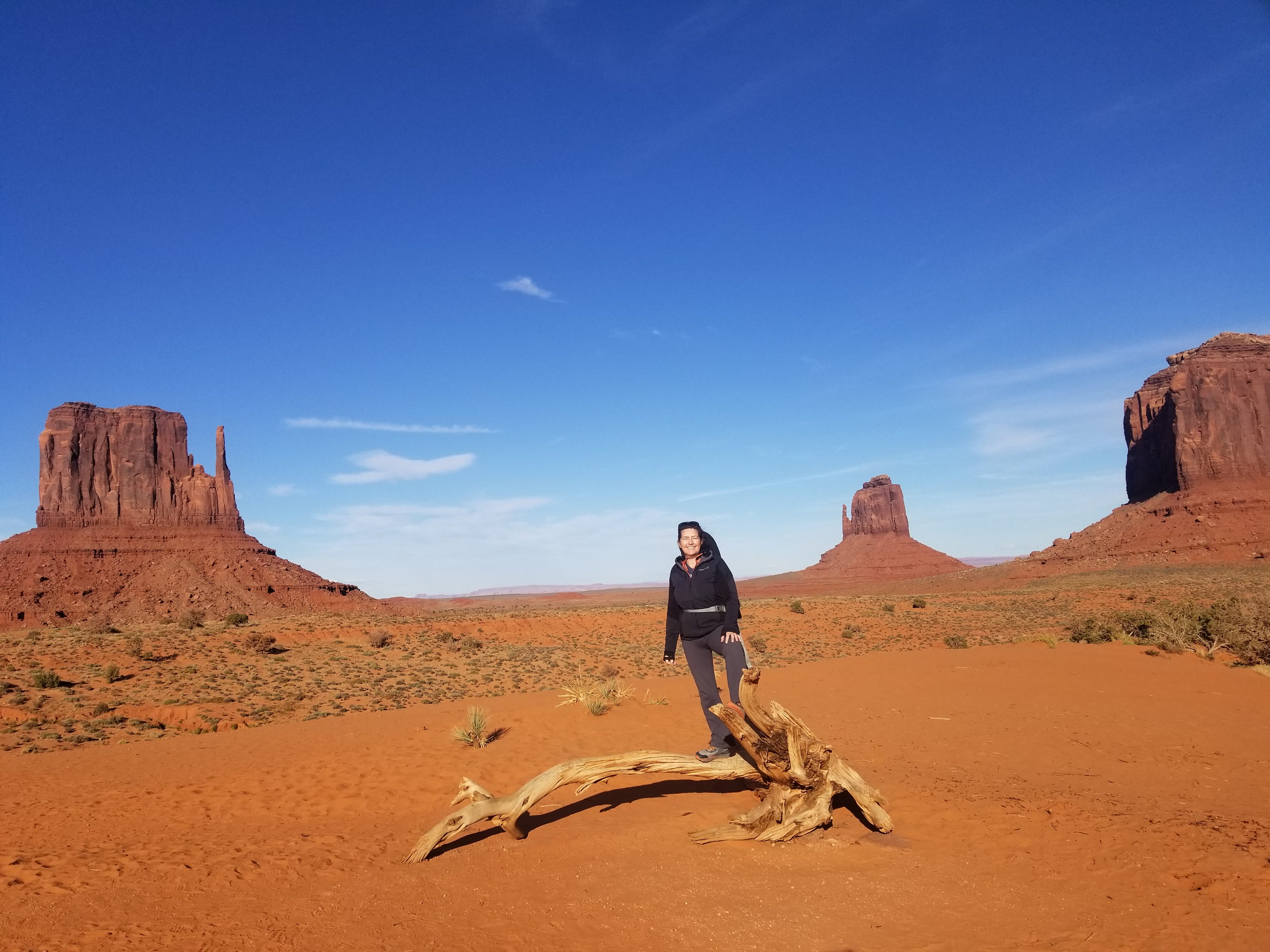
Me in Monument Valley. Copyright: Haas.
It made me think about the people protecting this land.
We often believe that we alone can’t do much. That we’re powerless to hold polluters accountable or to protect the forests and valleys we love.
But that’s not true. Almost all of these parks came about because of the determination of a few individuals, often strong-willed folk who decided these special places needed to be preserved and rallied communities for support.
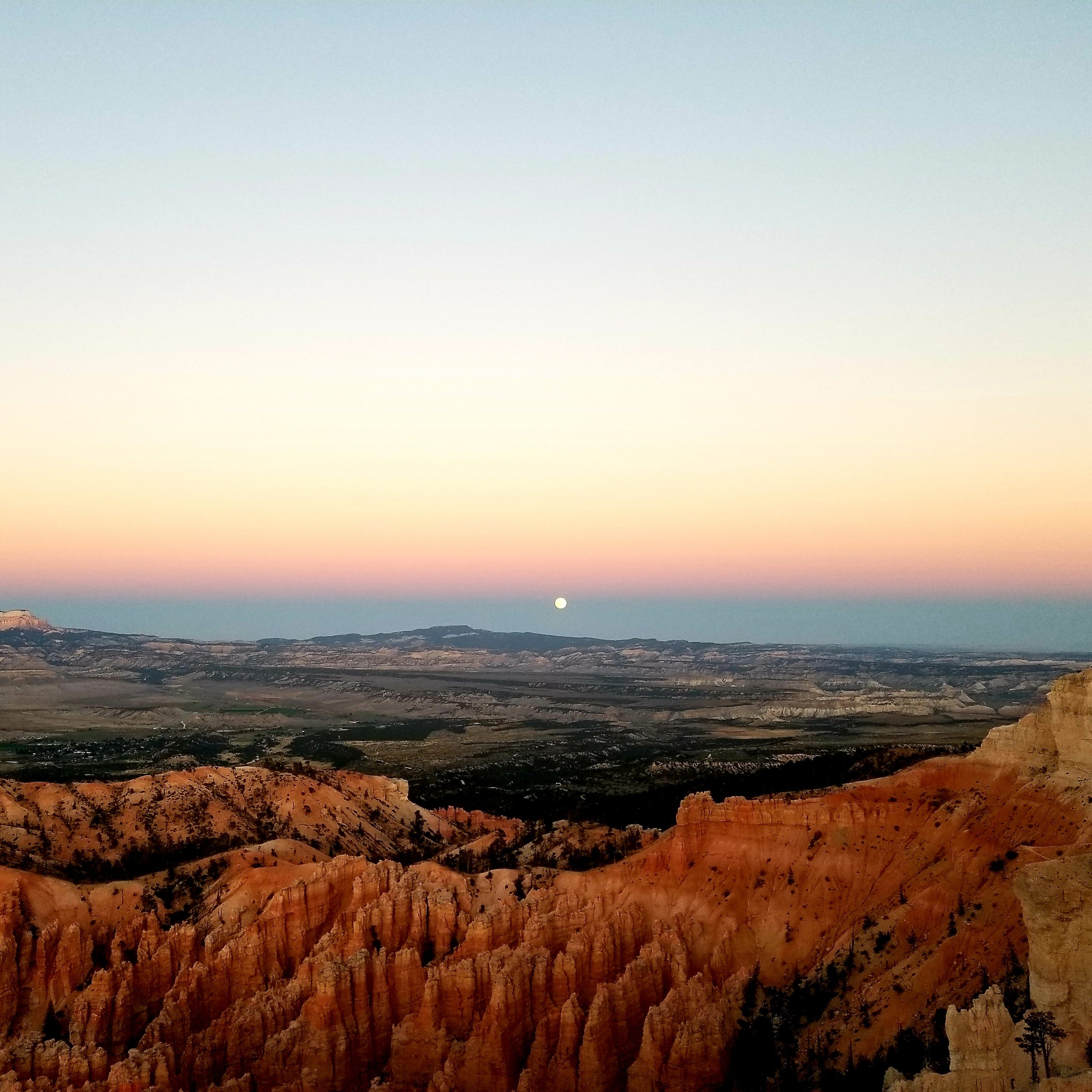
Harvest Moon over Bryce Canyon. Photo: Haas.
It’s also the reason why I interviewed Diana Wilson. You might have never heard of her. I didn’t know her name until famous environmental activist Erin Brockovich called Wilson the “real Erin Brockovich.”
The Texas Shrimper Holding Industrial Polluters Accountable
https://reasonstobecheerful.world/diane-wilson-texas-shrimper-pollution-fight/
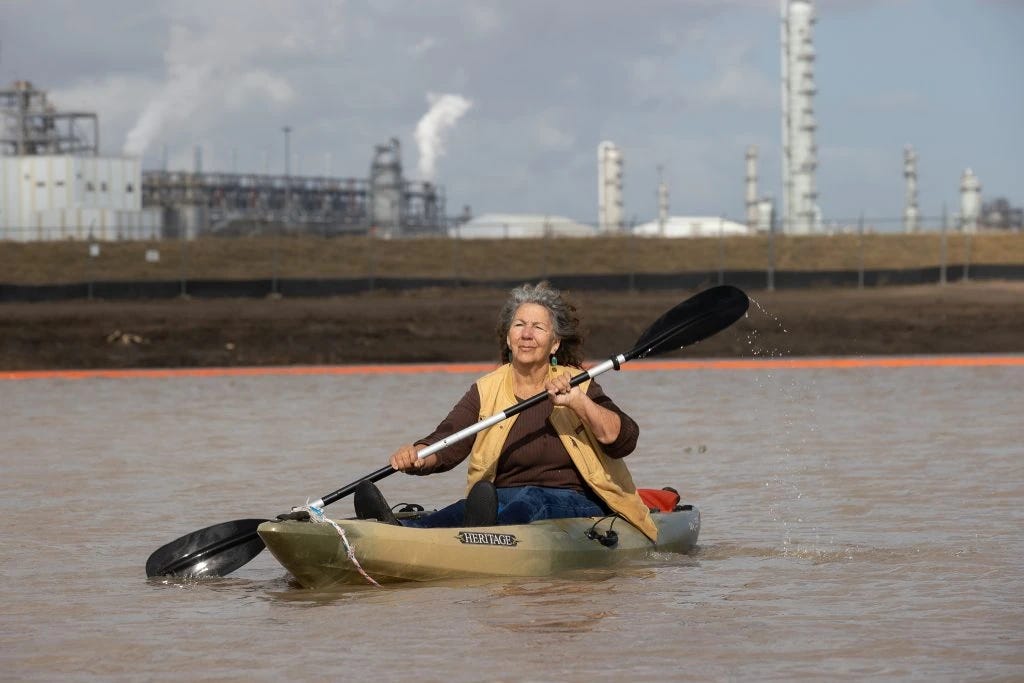
Diane Wilson in her kayak. Copyright: Goldman Prize.
She’s a real force of nature, speaking with me in her heavy Texan accent about the moments her life changed.
First, the shrimp disappeared. In late 1980s, the catch became so poor that Diane Wilson, a fourth-generation shrimper, had to take a job running a fish house in Calhoun County, Texas, where she grew up and still lives. Then diseased 300-pound dolphins started appearing, and dead pelicans kept floating to the shores of Lavaca Bay.
It was only when a fellow shrimper with three different kinds of cancer showed her a news clip from the Associated Press in 1989 that Wilson connected the dots. Calhoun County was the number-one county in the nation for toxic waste disposal, the news story read. Aluminum smelter Alcoa had contaminated Lavaca Bay and other nearby waters with mercury, creating one of the largest Superfund sites in the US.
Wilson was incredulous. “We had the distinct honor of containing half the hazardous waste Texas generated,” she learned. Nobody had ever mentioned that. “I was so surprised that I called a town meeting,” Wilson says with her heavy Texan accent. “Everybody went crazy and tried to talk me out of organizing a meeting.” How dare she, a shrimper woman, question the biggest employers in the county?
This was the day her “life turned 180 degrees from reclusive fisherwoman with five kids to controversial hell-raiser,” as Wilson puts it, and the beginning of a fight against some of the nation’s largest petrochemical companies that has lasted to this day. Wilson, now 74 years old, is the founder of Calhoun County Resource Watch and the executive director of San Antonio Bay Estuarine Waterkeeper, both small nonprofits and all-volunteer. Eight petrochemical plants operate in the region she calls home. Close to the largest concentration in the country, these plants make up 42 percent of the petrochemical capacity in the US. Locals call this area the “cancer belt.”
Nearly every day, you can find Wilson out in her pickup truck or in her kayak, looking for evidence of plastic and chemical pollution. “The bay is my home,” she says. “I’ve been shrimping since I was eight years old. Ever since I was a little girl, I remember the smell of the sea and the shrimp, getting on the boat in the early morning, seeing the pelicans gliding over the pink water in the sunrise. You never forget that. If I gave up on the bay, I’d give up on the best part of myself.”
13 hunger strikes later, in December 2019, a federal judge awarded Wilson and her coalition a historic $50 million dollar settlement — the largest win of an individual citizen against an industrial polluter ever in the history of the Clean Water Act. Wilson achieved this by doggedly collecting evidence of plastic and toxic waste pollution, storing it in her house and schlepping over 2,400 samples in ziplock bags, containing an estimated 26 million plastic pellets, to the courthouse on the first day of the trial.
She was also just honored with the 2023 Goldman Environmental Prize at the Kennedy Center this summer, because her decades-long fight is an exemplary story of grit and determination, as well as a paradigm for how one individual could rally a community against all odds. Wilson calls it “Diane versus Goliath.”
As the African proverb says, “If you think you are too small to make a difference, you haven't spent the night with a mosquito.”
Read more about how Wilson achieved the victory here.
Also, did you hear that mindfulness is now being taught in all NYC public schools?
Mindful Breathing Is Coming to New York City Classrooms This Fall
I dove into the science behind the new curriculum.
What I’m reading:
Remember Jesse Billauer, the paralyzed surfer I wrote about in Bouncing Forward? A 3x world adaptive surfing champion, he was recently inducted into the Surfing Walk of Fame.
The Guardian published a story about a different surfer, Owen Wrights, who very much reminded me of Jesse:
Surfer Owen Wright’s remarkable journey from brain injury to Olympic glory
I hope you continue to find my stories and research inspiring, uplifting and helpful.
Michaela